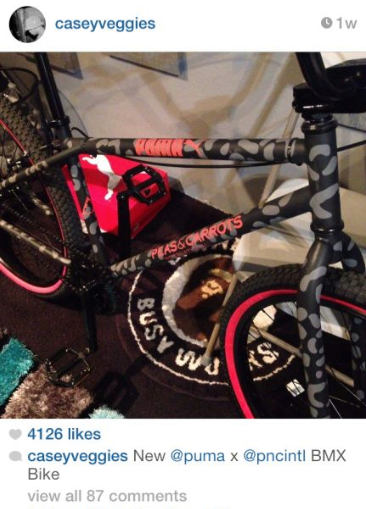
Now Travis is ready to give it a proper launch at Brooklyn Projects (on Melrose Avenue) in Los Angeles on July 12th.
The event promises a meet and greet with Travis Barker himself, limited edition tees (only available at the event) and a bike giveaway. I’m sure The Wildman, Todd Lyons, will also be in the house which should also liven up things.
Sounds like a good time to me. Check it out if you’re in the area.
If you spend any time at all on BMX racing websites and forums, it’s inevitable that you will stumble upon a thread on “how to grow the sport.”
That’s because BMX racing participation rates, while steady, have dipped considerably since the glory days of the 80s and early 90s.
Sure, BMX racing got some media attention from its inclusion in the past two Olympics, but it’s effect at track level was hardly the magic bullet many thought it would be. Many tracks struggle to make a full gate in many classes and local races can often have only a handful of motos.
In comparision, Roller Derby has seen a growth spurt in both popularity and participation that BMX racing can only envy.
What does Roller Derby have that BMX doesn’t?
Let’s take a look.
Roller Derby is primarily local. In BMX racing, “Nationals are the new locals”. Marquee riders are hardly ever at local races beyond stopping in for some gate practice. In Roller Derby, bouts between local teams are common. Moving on to national or international competition is secondary. Leagues and teams are sprouting up everywhere…from small towns to major urban centres.
Roller Derby participants are characters. From their outrageous costumes to their crazy nicknames, these girls create a persona that people can latch onto. Remember when BMX superstars like Stompin’ Stu and Pistol Pete Loncarevich used to have their nicknames and funny sayings sewn onto the back of their race pants? They were characters with larger than life personalities…contrast that to a pro of today with earbuds in, riding rollers between motos. In Roller Derby, these girls are larger than life.
Roller Derby bouts are not just a competitions, they’re a show. Look into a crowd at a BMX race, even a big one like a National, and chances are the the audience is made up of parents, spouses and brothers and sisters of the participants…maybe the grandparents too. You would be hardpressed to get a person off the street to plan an outing out to a BMX race just to watch. Contrast that with Roller Derby. People plan on a night out to check out a Roller Derby bout. People get into the characters, the excitement of local teams battling it out, the whole spectacle of it all. And most Roller Derby venues serve beer…that can’t hurt either.
Roller Derby is full contact in a way that BMX used to be. In Roller Derby posters you can often see lines like “the hits are real”. Roller Derby is full contact with people working their way through the crowd and sometimes winding up on the floor by a hit from a rival team. Likewise, back in the day it was more of a berm warfare kind of thing in BMX racing…elbows out and going for it. With the advent of more technical tracks and clipped in riders…many races end up being follow the leader type of exercises once riders exit the first turn with riders trying to avoid unclipping if they happen to end up going sideways (granted there are exceptions to this, but I’m speaking generally here).
Roller Derby walks the line between outsider and accessible perfectly. For all its badass babe mentality, a roller derby bout is something you can bring kids to without worry. If anything, witnessing a roller derby bout could be an empowering experience for the little tikes. Yet, 2o-year old hipsters also find it right up their alley too.
It’s interesting that in the roller derby movie, Whip it, the protagonist blows off the SAT prep to pursue Roller Derby. It reminds you of how in the movie RAD, Cru Jones forgoes taking the SATs to participate in the big Helltrack race that came to his town. But even in Rad, it’s all about the big race and Cru trying to fit in with the factory hot shots. In Roller Derby, it’s less about the competition and more about expressing who you are. Without trying so hard to fit in, Roller Derby has created something that people can buy into…and that appears to have made all the difference.
While their 22 inch tires have been receiving some noticeable buzz, it was a bit of a surprise to learn that S&M now offers a 24″ race tire called the Trackmark.
Available in two sizes, 24 X 1.75 and 24 x 2.1, the Trackmark is smooth, low-profile tire that looks like it would be perfectly at home on today’s groomed, hard-packed tracks.
Built with a kevlar bead and a lightweight casing, it’s clear that S&M has done their homework on this one.
Can’t wait to check these out up close.
The specs:
24 x 1.75
Inflated Width: 1.92″
Inflated Diameter: 23.62″
Max Pressure: 110 PSI
Weight: 19 oz
24 x 2.1
Inflated Width: 2.19″
Inflated Diameter: 24.37″
Max Pressure: 110 PSI
Weight: 22 oz
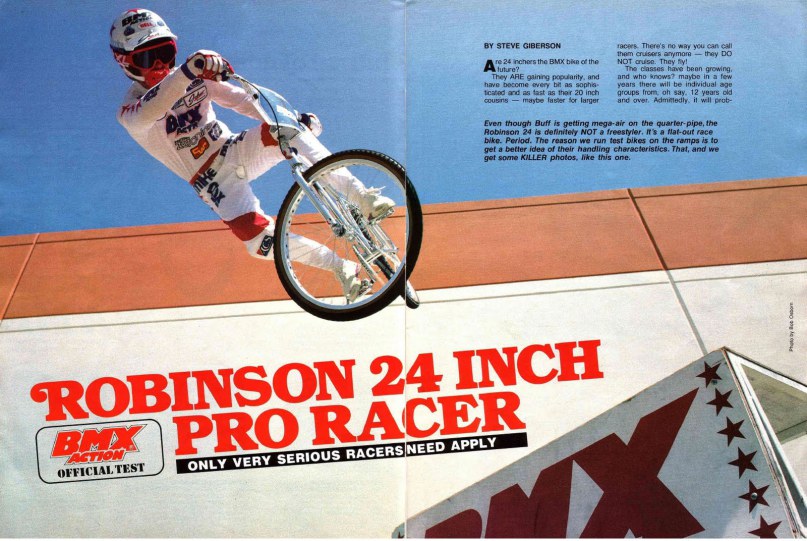
A staple in the legendary 80s BMX mag, BMX Action, RL Osborn and Mike Buff could always be counted on for getting rad and doing whatever it took for a great photo.
As the “Nerd herd”, R.L. & Buff were vital in setting BMX trends during the 80’s, from jumping styles in bike tests to the 4×4 vehicle craze, to clothing fashions and hairdos.
Whether that meant Buff hitting the quarterpipe on a Robinson 24 (“a serious race bike”)
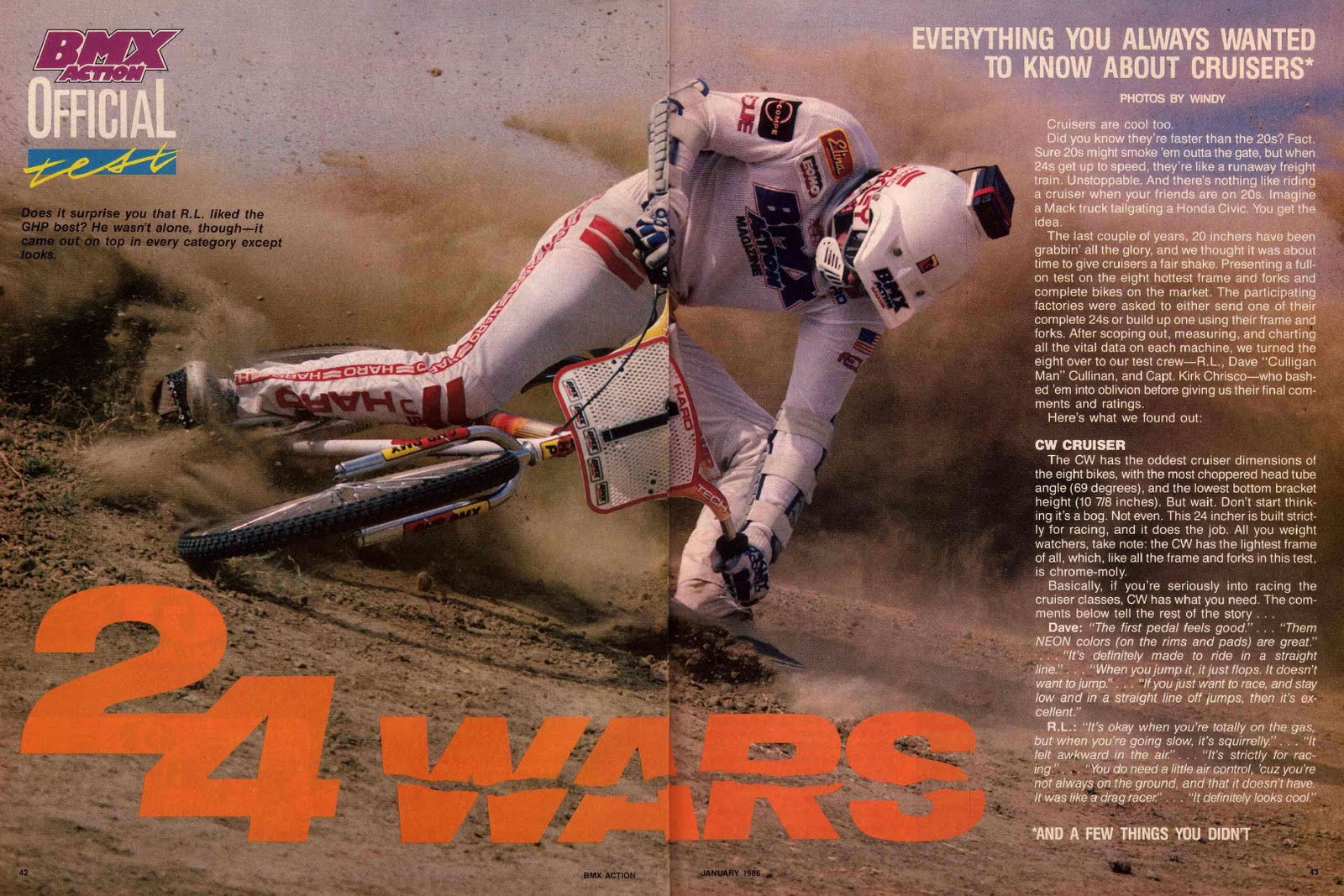
Or RL, laying down some serious roost in this two-page shot for a 24 shootout, they brought the heat every month.
And, with their riding captured by the equally legendary photographer/editor Bob Osborn, these photographs really stand the test of time.
Not a bad way to spend this “throwback thursday”, thinking back to this era and the impact these dudes had on it.
SE Bikes has been busy over the last day or so dropping teaser/sneak peek photos of some of their upcoming 2015 lineup.
One bike, in particular, is creating a lot of buzz…the new 24″ Quadangle Freestyle.
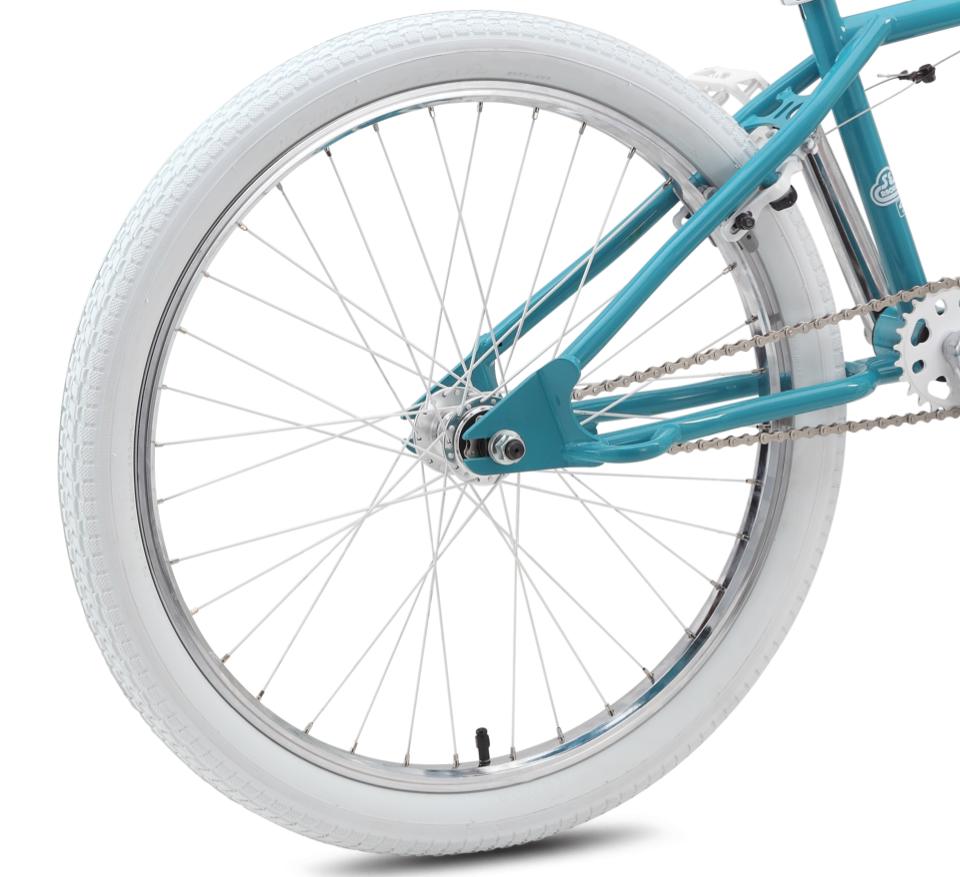
Sporting classic Oakley B-1B grips, front brakes, detangler, 80s-style white tires…this bike will pull at the heart strings of any old school BMX fan.
Keeping the bike era-correct, SE dispenses with the standard Landing Gear forks and has opted for…wait for it… Standing Gear forks (with the built-in platforms).
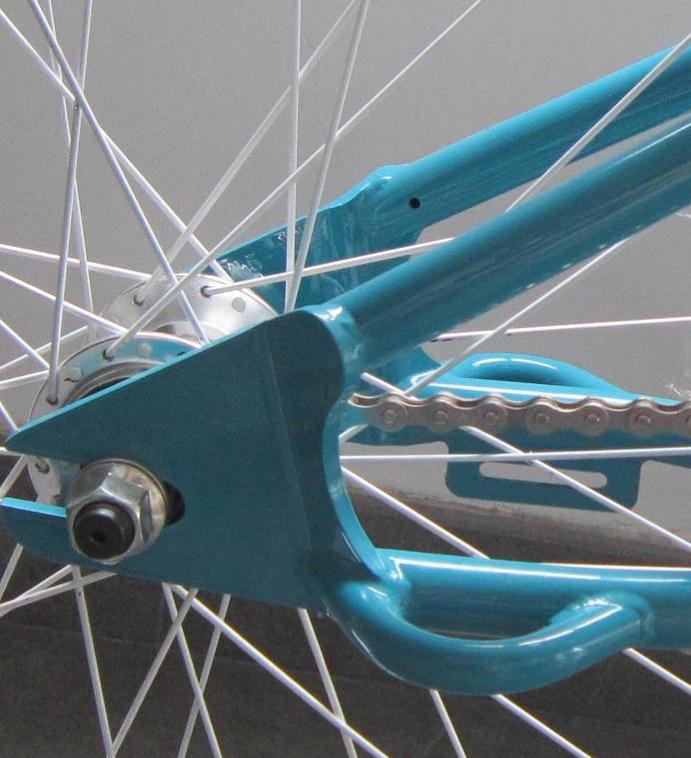
And if you’re going to go to the trouble of putting on Standing Gear forks, you gotta go with the frame platforms too, right?
SE doesn’t disappoint.
Boom!
Here’s a close-up of the frame’s standing platforms.
But this takes the whole retro revival thing to a new level.
Granted, it looks like a top-tube platform was not included…which is a bit of a misstep…bikes of the era (that this bike is supposed to emulate) almost always had top tube platforms.
Other than that though, the attention to detail…Oakley B-1B grips, Standing Gear…you name it….Todd Lyons and the SE crew get full points for going the extra mile on this one…this is one cool bike.
Sunday Bikes put out an early look at their 2015 lineup of completes this week.
The 24″ that made such an impact to the cruiser world when it was introduced (so many years ago), the Model C, is still in the lineup.
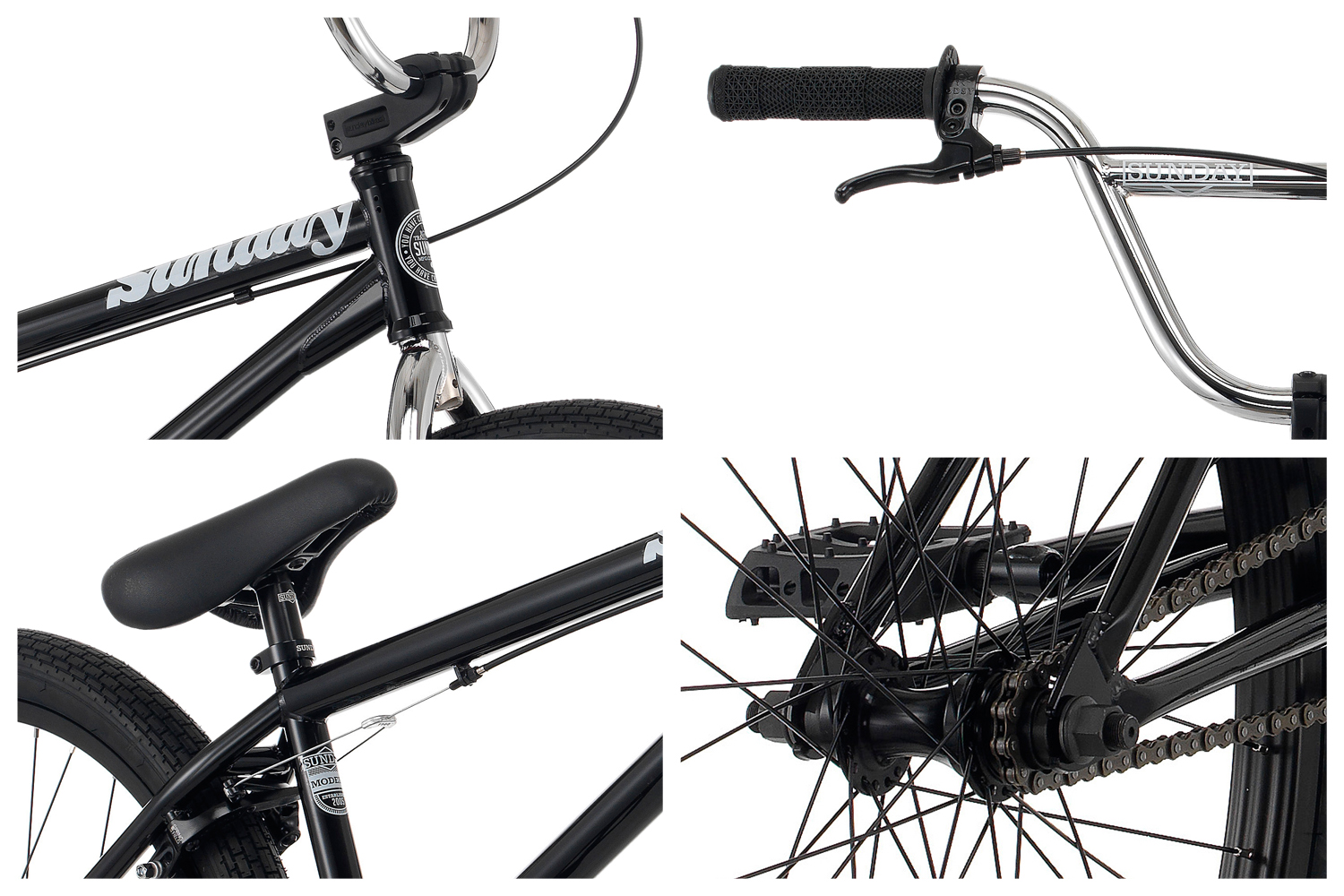
Listed as the Model C AM Plus now, it hasn’t departed too much from last year’s model, with the exception of a new look for 2015. There’s a lot more chrome this time around, including chrome handlebars and forks.
Here’s some of the key specs:
FRAME: 22″ TT, Chromoly Down Tube and Head Tube FORK: 24″ Fork w/ 2PC Chromoly Steerer Tube and Dropouts HANDLEBAR: 24UMPH XL Replica 7.75″ x 28″, 12° Back, 4° Up STEM: Sunday Freeze Top-Load Stem 52mm BRAKES: Odyssey Springfield GRIPS: Odyssey Gary Young Signature SEAT/SEAT POST: Sunday Tripod SPROCKET: Sunday , 25T, Steel CRANKS: 175mm, 3-piece, Chromoly PEDALS: Odyssey Twisted PC RIMS: Sunday Lightning Rim 36H FRONT HUB: Sunday, Sealed, 36H, Female 3/8″ Axle REAR HUB: Sunday, Sealed, 36H, 10T TIRES: Innova 24 x 2.125″ (F & R)








 cruiser revolution