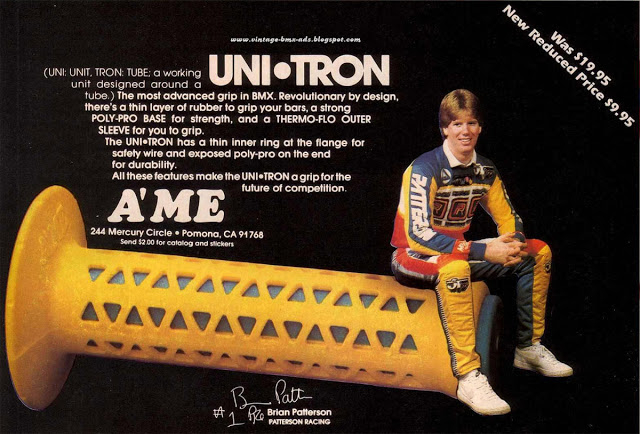
Word on the street is that the mold was thought to be lost but was recently found again.
I’m not sure if that part is completely true but I also don’t really care either…I’m just stoked to see that this grip is going to be available again!
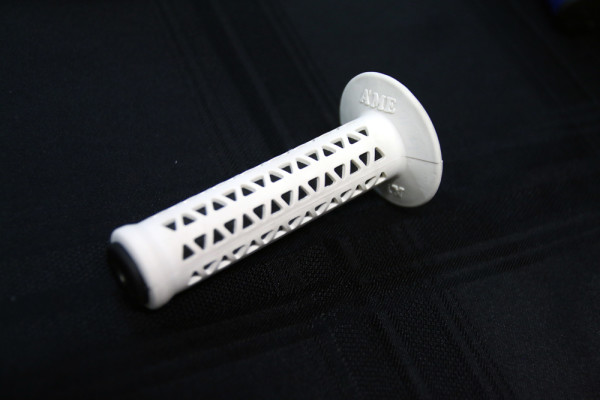
A’ME is also going to put a little indicator (on the flange, I believe) to distinguish this new version from the vintage versions…which I’m sure produced a sigh of relief on the part of old school parts collectors.
The plan is to do a limited run in a variety of colors in the $30 (US) price range.
I’ve gotta see if I can get my hands on a pair of these.
You may recall that this old school-looking, new school-riding 24 caught our attention back in June when a sneak peek of the bike turned our heads.
Now a steady stream of photos in SE’s social media accounts have shown that this cruiser is no carpet queen.
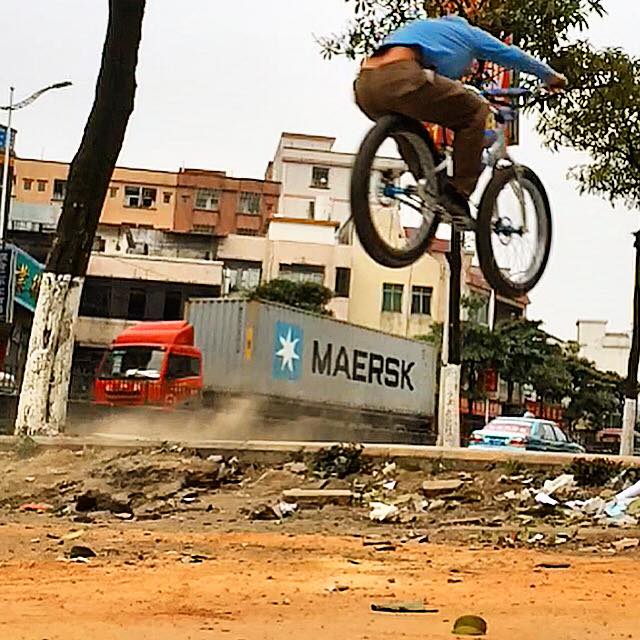
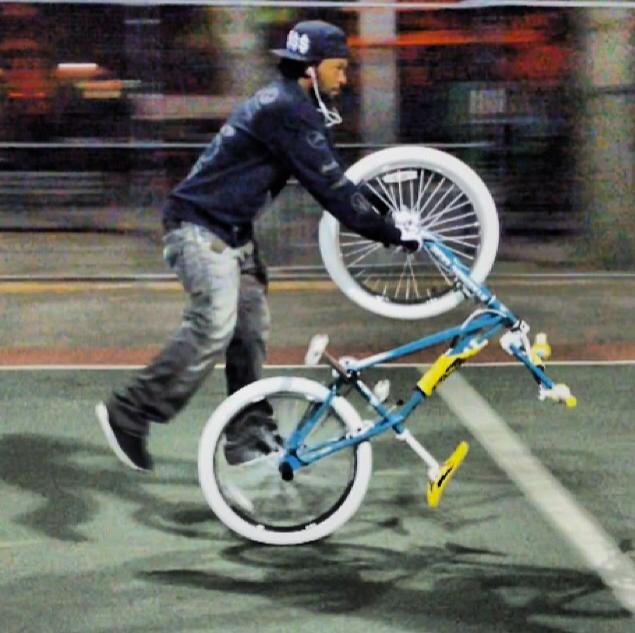
Whether it’s Dan Hubbard busting out a classic cherrypicker (with a rider in a 2-Hip shirt making the perfect backdrop)
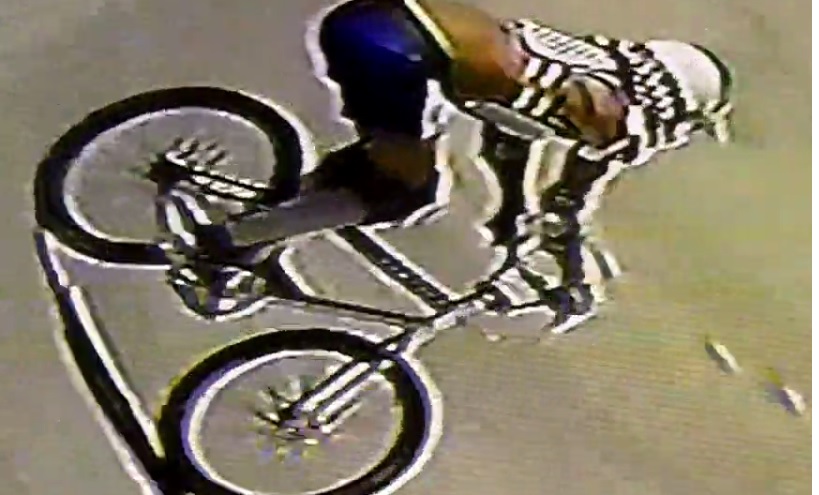
or @rrdblocks getting fresh with another flatland move
It looks like this bike has some chops.
Word on the street is that SE has also dropped off a Quadangle Freestyle off with the BMX Plus folks for a bike test.
Looking forward to seeing what they have to say about this new project from SE (not to mention it will also be some well-deserved coverage for the 24″ scene in a mainstream pub).
Sometimes vendors have to make the tough call when it comes to what bikes and parts to display at Interbike.
Whether it’s logistics, space issues or something else, sometimes bikes and components that you were kinda hoping to see aren’t on display.
Here are some of the bikes that I wished were on display at Interbike, based on the catalogs that I saved from the show.
The first is the 2015 Stolen Saint XLT 24 Completein Chrome. This thing looks sweet! (And the Matte Electric Red colorway is not too shabby either.)
The next bike is also from Stolen. It’s the 2015 Zeke Complete 26″ in Matte Electric Green…this colorway will definitely turn some heads! (It’s also available in Matte Raw Silver.)
The next is the SE Quadangle Freestyle 24. If you recall, we checked out a sneak peek of this bike back in June. I had my fingers crossed that I would be able to check it out in Vegas. No such luck. Still digging this bike though…old school looks with new school geo…would love to try one of these bad boys out!
Back in the late 80s/early 90s, Freestylin’ magazine would run articles on zines (small, indy-style, xeroxed publications) that riders were producing for their local scenes.
I was intrigued by them and managed to get a few through the mail. It was cool seeing the different scenes out there and the unique ways that people would put stuff together.
Time passed and one summer, while catching a freestyle team doing a bike shop tour (was it Haro, GT? I can’t remember…) someone handed my a copy of the iconic AGGRO RAG zine.
Wow.
I was blown away.
It was so good.
I had to get in on this action.
I quickly started amassing pictures, images and anything else I could think of.
I threw it together old-school style with scissors and glue-stick and took it off to a local printer to do a print run.
I handed them out whereever I could, mailed them off to people and even sent a few off to the big mags at the time, GO and BMX Plus.
Then…nothing
I’m not sure what I expected at that point but I was hoping for some kind of response. I heard back from a few people that they liked it but that was it.
A few months passed.
Then…out of the blue…I started getting multiple letters a day for people asking about the zine (remember this was before email took off). I couldn’t figure out why.
Then finally, someone gave me a clue…”I read your letter in BMX Plus!”
BMX Plus! had printed my letter, address and all, and people were into checking out my little old zine.
I was stoked.
And then I realized I had to make issue #2.
That started off a 6-year journey of sporadic publishing, writing about contests and crazy road trips and all the associated shenanigans that come with it.
If you spend any time at all on BMX racing websites and forums, it’s inevitable that you will stumble upon a thread on “how to grow the sport.”
That’s because BMX racing participation rates, while steady, have dipped considerably since the glory days of the 80s and early 90s.
Sure, BMX racing got some media attention from its inclusion in the past two Olympics, but it’s effect at track level was hardly the magic bullet many thought it would be. Many tracks struggle to make a full gate in many classes and local races can often have only a handful of motos.
In comparision, Roller Derby has seen a growth spurt in both popularity and participation that BMX racing can only envy.
What does Roller Derby have that BMX doesn’t?
Let’s take a look.
Roller Derby is primarily local. In BMX racing, “Nationals are the new locals”. Marquee riders are hardly ever at local races beyond stopping in for some gate practice. In Roller Derby, bouts between local teams are common. Moving on to national or international competition is secondary. Leagues and teams are sprouting up everywhere…from small towns to major urban centres.
Roller Derby participants are characters. From their outrageous costumes to their crazy nicknames, these girls create a persona that people can latch onto. Remember when BMX superstars like Stompin’ Stu and Pistol Pete Loncarevich used to have their nicknames and funny sayings sewn onto the back of their race pants? They were characters with larger than life personalities…contrast that to a pro of today with earbuds in, riding rollers between motos. In Roller Derby, these girls are larger than life.
Roller Derby bouts are not just a competitions, they’re a show. Look into a crowd at a BMX race, even a big one like a National, and chances are the the audience is made up of parents, spouses and brothers and sisters of the participants…maybe the grandparents too. You would be hardpressed to get a person off the street to plan an outing out to a BMX race just to watch. Contrast that with Roller Derby. People plan on a night out to check out a Roller Derby bout. People get into the characters, the excitement of local teams battling it out, the whole spectacle of it all. And most Roller Derby venues serve beer…that can’t hurt either.
Roller Derby is full contact in a way that BMX used to be. In Roller Derby posters you can often see lines like “the hits are real”. Roller Derby is full contact with people working their way through the crowd and sometimes winding up on the floor by a hit from a rival team. Likewise, back in the day it was more of a berm warfare kind of thing in BMX racing…elbows out and going for it. With the advent of more technical tracks and clipped in riders…many races end up being follow the leader type of exercises once riders exit the first turn with riders trying to avoid unclipping if they happen to end up going sideways (granted there are exceptions to this, but I’m speaking generally here).
Roller Derby walks the line between outsider and accessible perfectly. For all its badass babe mentality, a roller derby bout is something you can bring kids to without worry. If anything, witnessing a roller derby bout could be an empowering experience for the little tikes. Yet, 2o-year old hipsters also find it right up their alley too.
It’s interesting that in the roller derby movie, Whip it, the protagonist blows off the SAT prep to pursue Roller Derby. It reminds you of how in the movie RAD, Cru Jones forgoes taking the SATs to participate in the big Helltrack race that came to his town. But even in Rad, it’s all about the big race and Cru trying to fit in with the factory hot shots. In Roller Derby, it’s less about the competition and more about expressing who you are. Without trying so hard to fit in, Roller Derby has created something that people can buy into…and that appears to have made all the difference.

 Watch for it to start popping up at SE dealers sometime this summer.







 cruiser revolution
