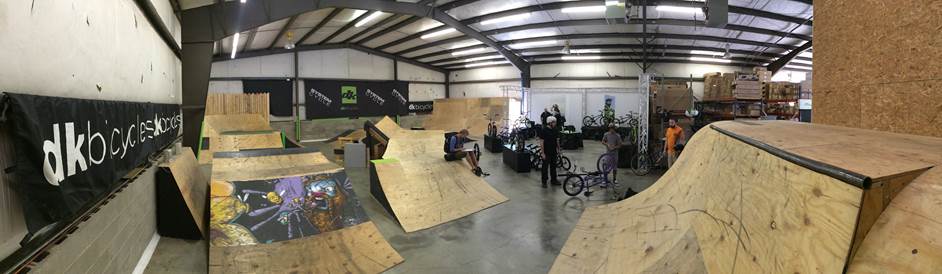
DK Bicycles decided to mix things up this year and forgo the annual trip to Vegas/Interbike and instead have a dealer open house at DK HQ to display their wares.
It was a pretty cool setup, as you can see from this shot of the event space . A fun little indoor park with a booth that had all the 2015 bikes right across from it.
In terms of their new bikes, DK has a solid cruiser lineup for 2015.
First up, their top-of-the line race bike, the Elite Cruiser.
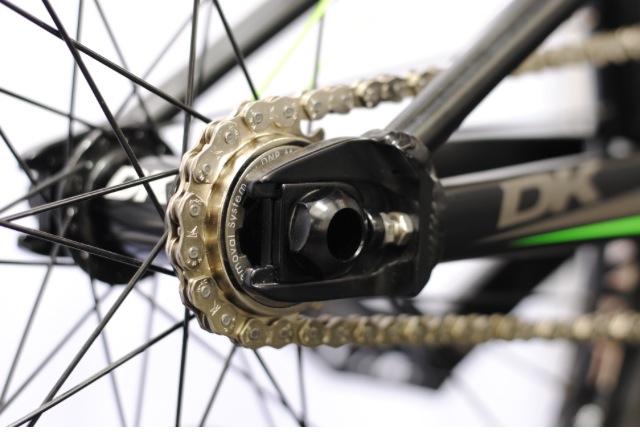
For 2015, they’ve changed the grips to their own DK Tsuka lock-ons, updated the chain stays to be bigger and stiffer, and added a 20mm rear hub.
The mid-level Sprinter Cruiser gets an update in the looks department with an eye-catching colorway. No major changes component and handling-wise.
The “ready-to-shred” Cygnus gets bigger tires with pin stripe sidewalls, a padded mid style seat/post combo, and chrome bars. It also gets a new look: colors include Polished Red (essentially a transparent red over silver) and a Electric Neon Blue.
Some pretty good-looking rides there. Check ’em out at your local DK dealer.
BMX racers are always looking for that extra edge.
A couple years back, we learned that drinking a slurpee could make the difference on a hot race day.
Well, I think I have stumbled on to the next game changer in BMX, the umbrella.
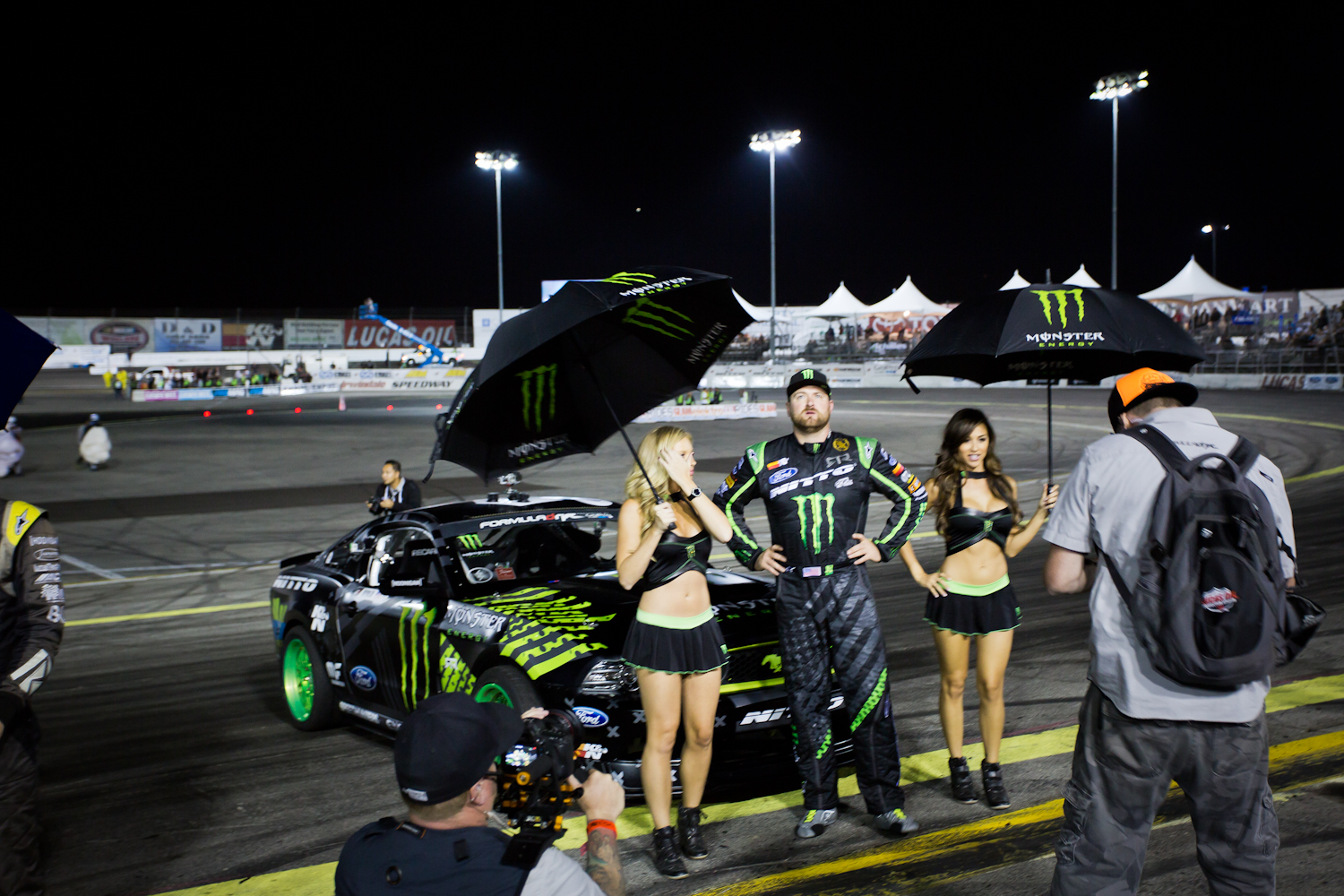
If you look at other racing disciplines, it’s not uncommon to see a racer being shielded from the elements by an umbrella held by a helpful assistant.
Just look at motorcycle racing.
Or auto racing
(Heck, the sun’s not even out here!)
Not sure why BMX racing hasn’t latched onto this ground-breaking idea.
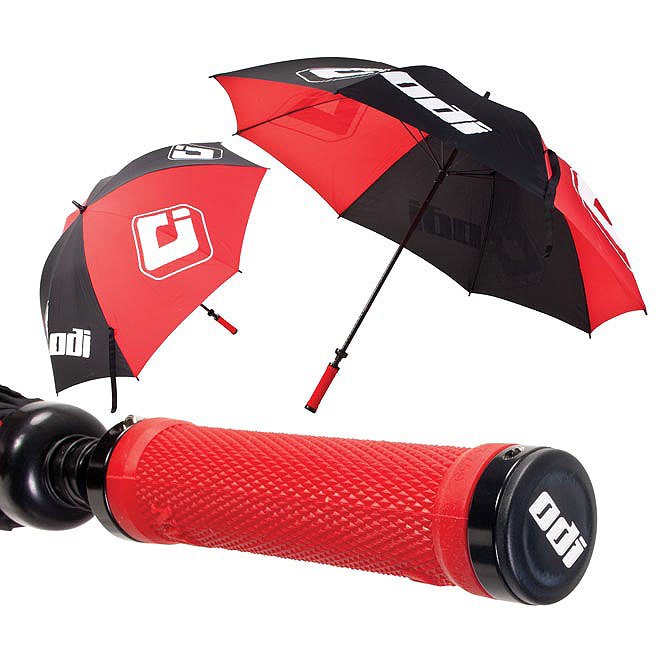
ODI even manufactures a pit umbrella, complete with a lock-on grip at the end! It’s practically crying out for BMX racers to use it in staging.
Actually, maybe I’m being a little hasty.
I did spot a racer in staging this summer that was trying out this umbrella idea.
That’s me in the blue TLD jersey, hating life because I don’t have any shade…while over beside me, that kid is just chilling…waiting to take on his class; all cool, calm and collected.
Must be an early adopter.
I gotta jump on this bandwagon…I think I’m going to order an umbrella today.
I first heard of this development when I was catching up with Quebec racer, Andrew Mueller, at a race a few weeks back.
Andrew Mueller lays the power down at MBMX (pic by Steve Di Monte)
I was stoked to hear the news. I’ve been thinking about this idea for a while and was always disappointed when it would be raised on BMX racing forums and then quickly dismissed (shot down is a better description) by folks saying “it would be harder to fill gates”, “there are already too many classes”, “go race 20 then”…blah, blah.
Turns out these arguments to stick with the status quo are all bunk if the results in Quebec are anything to go by.
According to Mueller, more and more riders are entering races and it’s not uncommon to get 2-3 full gates in the “sport’ class alone.
Older riders in Quebec are now returning to the sport (or just giving it a try for the first time) because the intimidation factor is significantly lower. They no longer have to gate up immediately with highly experienced/skilled riders that are not afraid to bang bars or hit the big jumps.
BMX racing’s appeal and selling proposition was always “nobody has to sit on the bench.” Yet the Cruiser class (in USA BMX/BMX Canada) has always kept some people on the bench by not offering an option to people that are not willing or interested in racing an expert-level class.
Kudos to FQSC for making this important move.
Looks like it’s really paying off for them.
Will USA BMX/BMX Canada have the courage to make a similar change?
Now it appears his anti-bike stance has extended to the construction of the BMX track being built as one of the venues for the upcoming Pan-Am Games in Toronto.
As part of an online video series, called Coffee Run, Rob Ford takes a ride with musician DeadMau5 to talk local politics, driving in Toronto and…the construction of the new Pan Am BMX track.
Here’s just part of the conversation (starting at about 17:30):
Ford: “There are some things that are just ridiculous. Like they’re building a BMX track.”
Deadmau5: “I saw that.”
Ford: “$4.5 million … They’re saying a professional BMX track, they got a quote, listen to this, for a million and a half bucks. A f–king track!”
Deadmau5: “I’ll do it for $500.”
Ford: I’ve got more calls coming in, and they said, ‘Hold on a second, no, the real cost is going to be $4.5 million.’ And I said, ‘Whoa partner.’ I said, ‘How can you get a quote for $1.5 million and then all of a sudden it triples in price?’ There’s a scam going on if you asked me. It’s ridiculous.”
Granted, $4.5 million does seem a little rich for a BMX track. (That must be one heck of an announcer’s tower being built.)
Regardless of where you stand on the price tag of the Pan Am track, and Rob Ford in general, it’s still funny to hear him say, after all his past shenanigans, “I’m not a BMXer” in an interview.
That, and to think of how much caffeine is in his coffee order…five espresso shots(!) in a single cup.
Ssquared has built up quite a following in the race community over the past few years. They have a reputation for solid bikes that have a geometry that people really seem to dig.
If you spend any time at all on BMX racing websites and forums, it’s inevitable that you will stumble upon a thread on “how to grow the sport.”
That’s because BMX racing participation rates, while steady, have dipped considerably since the glory days of the 80s and early 90s.
Sure, BMX racing got some media attention from its inclusion in the past two Olympics, but it’s effect at track level was hardly the magic bullet many thought it would be. Many tracks struggle to make a full gate in many classes and local races can often have only a handful of motos.
In comparision, Roller Derby has seen a growth spurt in both popularity and participation that BMX racing can only envy.
What does Roller Derby have that BMX doesn’t?
Let’s take a look.
Roller Derby is primarily local. In BMX racing, “Nationals are the new locals”. Marquee riders are hardly ever at local races beyond stopping in for some gate practice. In Roller Derby, bouts between local teams are common. Moving on to national or international competition is secondary. Leagues and teams are sprouting up everywhere…from small towns to major urban centres.
Roller Derby participants are characters. From their outrageous costumes to their crazy nicknames, these girls create a persona that people can latch onto. Remember when BMX superstars like Stompin’ Stu and Pistol Pete Loncarevich used to have their nicknames and funny sayings sewn onto the back of their race pants? They were characters with larger than life personalities…contrast that to a pro of today with earbuds in, riding rollers between motos. In Roller Derby, these girls are larger than life.
Roller Derby bouts are not just a competitions, they’re a show. Look into a crowd at a BMX race, even a big one like a National, and chances are the the audience is made up of parents, spouses and brothers and sisters of the participants…maybe the grandparents too. You would be hardpressed to get a person off the street to plan an outing out to a BMX race just to watch. Contrast that with Roller Derby. People plan on a night out to check out a Roller Derby bout. People get into the characters, the excitement of local teams battling it out, the whole spectacle of it all. And most Roller Derby venues serve beer…that can’t hurt either.
Roller Derby is full contact in a way that BMX used to be. In Roller Derby posters you can often see lines like “the hits are real”. Roller Derby is full contact with people working their way through the crowd and sometimes winding up on the floor by a hit from a rival team. Likewise, back in the day it was more of a berm warfare kind of thing in BMX racing…elbows out and going for it. With the advent of more technical tracks and clipped in riders…many races end up being follow the leader type of exercises once riders exit the first turn with riders trying to avoid unclipping if they happen to end up going sideways (granted there are exceptions to this, but I’m speaking generally here).
Roller Derby walks the line between outsider and accessible perfectly. For all its badass babe mentality, a roller derby bout is something you can bring kids to without worry. If anything, witnessing a roller derby bout could be an empowering experience for the little tikes. Yet, 2o-year old hipsters also find it right up their alley too.
It’s interesting that in the roller derby movie, Whip it, the protagonist blows off the SAT prep to pursue Roller Derby. It reminds you of how in the movie RAD, Cru Jones forgoes taking the SATs to participate in the big Helltrack race that came to his town. But even in Rad, it’s all about the big race and Cru trying to fit in with the factory hot shots. In Roller Derby, it’s less about the competition and more about expressing who you are. Without trying so hard to fit in, Roller Derby has created something that people can buy into…and that appears to have made all the difference.
While their 22 inch tires have been receiving some noticeable buzz, it was a bit of a surprise to learn that S&M now offers a 24″ race tire called the Trackmark.
Available in two sizes, 24 X 1.75 and 24 x 2.1, the Trackmark is smooth, low-profile tire that looks like it would be perfectly at home on today’s groomed, hard-packed tracks.
Built with a kevlar bead and a lightweight casing, it’s clear that S&M has done their homework on this one.
Can’t wait to check these out up close.
The specs:
24 x 1.75
Inflated Width: 1.92″
Inflated Diameter: 23.62″
Max Pressure: 110 PSI
Weight: 19 oz
24 x 2.1
Inflated Width: 2.19″
Inflated Diameter: 24.37″
Max Pressure: 110 PSI
Weight: 22 oz
 In terms of their new bikes, DK has a solid cruiser lineup for 2015.
 For 2015, they’ve changed the grips to their own DK Tsuka lock-ons, updated the chain stays to be bigger and stiffer, and added a 20mm rear hub.
 The mid-level Sprinter Cruiser gets an update in the looks department with an eye-catching colorway. No major changes component and handling-wise.
 Some pretty good-looking rides there. Check ’em out at your local DK dealer.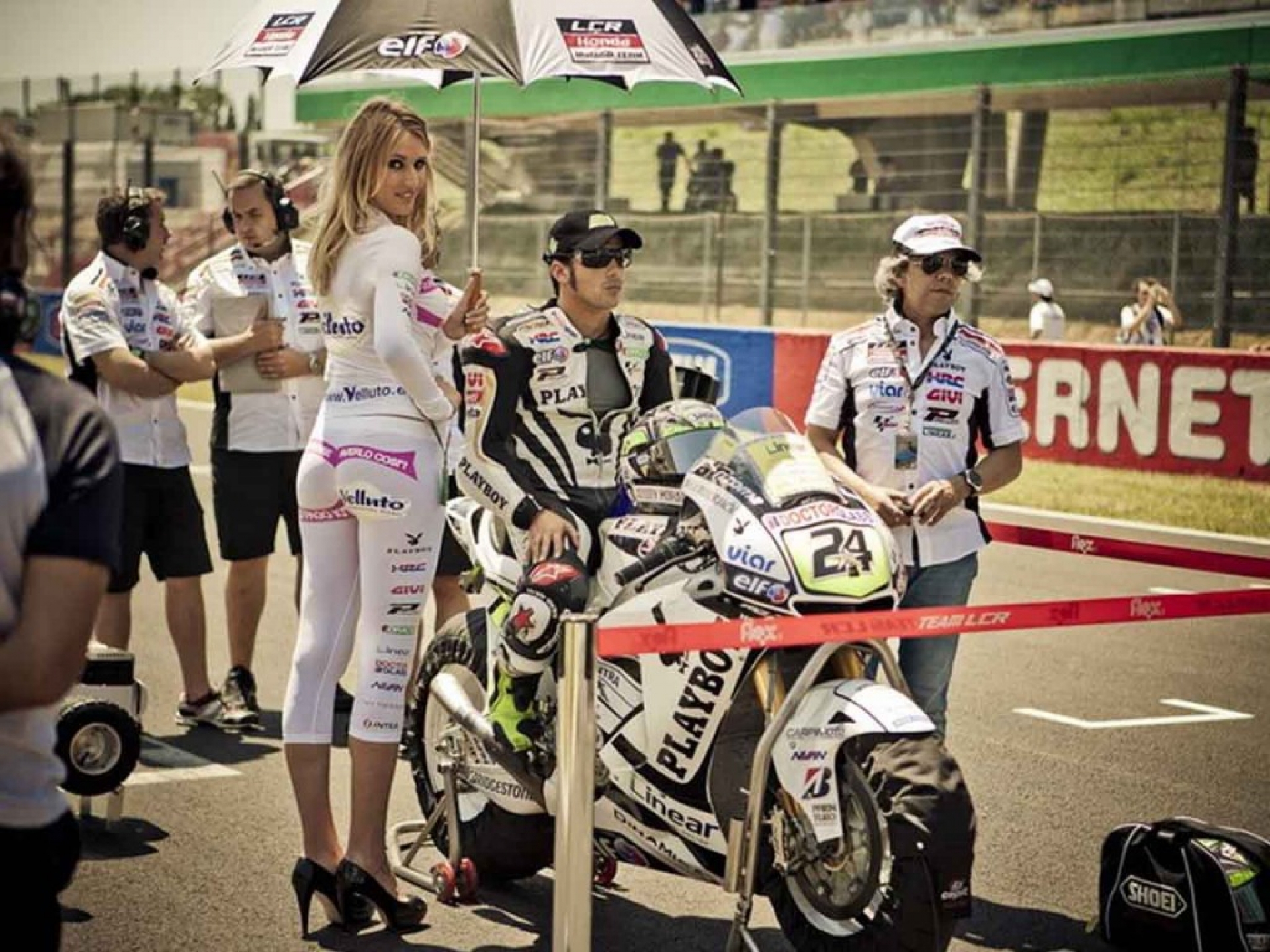






 cruiser revolution